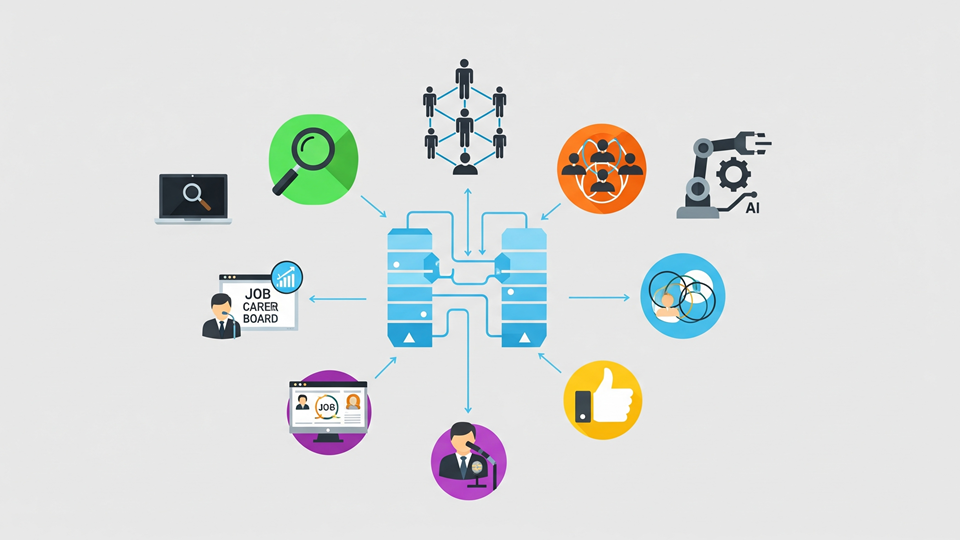
Top 5 Channels to Source High-Quality Candidates in 2025
Explore the top 5 channels to source high-quality candidates in 2025. Learn how to use LinkedIn, niche boards, referrals, communities, and AI tools to build a robust talent pipeline.
Read More

One of the biggest challenges in modern recruitment is engaging passive candidates. These are professionals who are not actively applying for jobs but may be open to the right opportunity. Studies suggest that up to 70 percent of the global workforce falls into this category, making it a critical segment for companies that want to stay competitive.
Passive prospects often ignore generic outreach and mass job postings. They are not browsing job boards daily, and they are unlikely to respond to templated messages. This means that traditional recruitment tactics are less effective when targeting them.
To convert passive talent into active candidates, companies need to rethink their approach. It is not about pushing job openings but about building relationships, delivering value, and creating meaningful engagement over time. This shift requires a more strategic and personalized recruitment process. Instead of focusing only on immediate hiring needs, organizations must invest in long-term talent pipelines that can be activated when the right opportunity arises.
Understanding this mindset is the first step toward building a system that consistently turns silent prospects into engaged candidates.
Personalization is no longer optional in recruitment. Passive candidates expect communication that feels tailored to them, not mass-produced. A generic message such as "We found your profile interesting" is unlikely to generate interest.
Effective outreach starts with research. Understanding a candidate’s background, skills, and career trajectory allows you to craft messages that resonate. For example, referencing a recent project, a specific skill, or a shared interest can significantly increase response rates.
Timing also plays a role. Reaching out after a candidate has achieved a milestone, such as a promotion or completed project, can make your message more relevant. It shows that you are paying attention and not simply sending bulk messages.
Another important factor is clarity. Passive candidates do not have time to decode vague messages. Clearly communicate why you are reaching out, what the opportunity involves, and what makes it compelling. For instance, instead of saying "We have an exciting role," you could say "We are building a new product team focused on AI-driven customer support, and your experience in machine learning could be a strong fit."
Small adjustments like these can dramatically improve engagement and set the foundation for meaningful conversations.
Turning a passive prospect into an active candidate rarely happens in a single interaction. It requires consistent and thoughtful engagement over time. One effective strategy is to share valuable content. This could include industry insights, company updates, or relevant articles that align with the candidate’s interests. The goal is to provide value without immediately asking for something in return. For example, if you are targeting software engineers, sharing insights about new technologies, development practices, or product innovations can position your company as a thought leader.
Another approach is to invite prospects to events, webinars, or informal networking sessions. These interactions allow candidates to learn more about your company in a low-pressure environment. Consistency is key. A single message every few months is not enough to build a relationship. At the same time, over-communication can feel intrusive. Finding the right balance requires tracking interactions and understanding candidate preferences.
Companies that invest in nurturing relationships often see higher conversion rates when roles become available. Candidates who are already familiar with your brand are more likely to engage and move forward in the process. This approach transforms recruitment from a transactional activity into a continuous engagement strategy.
While personalization and relationship building are essential, scaling these efforts requires the right tools and data-driven processes. Modern recruitment platforms allow teams to track candidate interactions, segment talent pools, and automate parts of the outreach process. This ensures that no potential candidate is overlooked. For example, you can create talent segments based on skills, experience, or career interests. This allows you to send targeted messages that are relevant to each group, rather than relying on one-size-fits-all communication.
Automation can also help maintain consistency. Scheduling follow-ups, sending reminders, and tracking engagement metrics can be handled efficiently with the right systems. Data provides valuable insights into what works and what does not. Metrics such as response rates, engagement levels, and conversion rates help refine your strategy over time. For instance, if you notice that personalized messages referencing specific projects have a 40 percent higher response rate, you can prioritize that approach across your team.
Technology should enhance, not replace, the human aspect of recruitment. The goal is to free up time for recruiters to focus on building genuine relationships while ensuring that processes remain efficient and scalable.
Even with strong engagement, passive candidates will not become active unless the opportunity itself is compelling. This means going beyond job descriptions and focusing on what truly matters to candidates. Career growth is often a primary motivator. Clearly outlining how a role contributes to long-term development can make a significant difference. For example, highlighting opportunities to lead projects, learn new skills, or work with cutting-edge technologies can increase interest.
Company culture is another critical factor. Passive candidates want to understand what it is like to work at your organization. Sharing stories, testimonials, and real examples can help bring your culture to life.
Flexibility is increasingly important as well. Remote work options, flexible schedules, and work-life balance are key considerations for many professionals.
Transparency builds trust. Being clear about expectations, compensation ranges, and growth opportunities helps candidates make informed decisions. For example, a company that openly shares salary ranges and career paths is more likely to attract candidates who value honesty and clarity.
Ultimately, the goal is to present opportunities that align with the candidate’s aspirations, not just your immediate hiring needs.
Converting passive prospects into engaged candidates is not about quick wins. It is about building a sustainable system that combines personalization, consistency, and technology. Organizations that succeed in this area treat recruitment as a long-term investment. They focus on relationships, provide value, and continuously refine their approach based on data.
Start by evaluating your current outreach strategies. Identify areas where personalization can be improved, where engagement can be more consistent, and where technology can support your efforts. Platforms like Zamdit can play a key role in this transformation by centralizing candidate data, enabling personalized communication, and helping teams manage talent pipelines effectively.
By taking a proactive and strategic approach, you can turn silent prospects into active, engaged candidates who are ready to contribute to your organization’s success.
Explore the top 5 channels to source high-quality candidates in 2025. Learn how to use LinkedIn, niche boards, referrals, communities, and AI tools to build a robust talent pipeline.
Read More
Master the art of cold outreach for recruitment. Learn how to engage talent effectively, personalize communication, and avoid spammy approaches while building strong candidate relationships.
Read More
A sustainable candidate pipeline ensures your hiring process never stalls. Learn step-by-step strategies to build, engage, and optimize a pool of qualified candidates ready for future roles.
Read MoreZamdit brings together every tool you need to find, assess, and hire top talent faster, smarter, and with complete clarity.
No credit card required