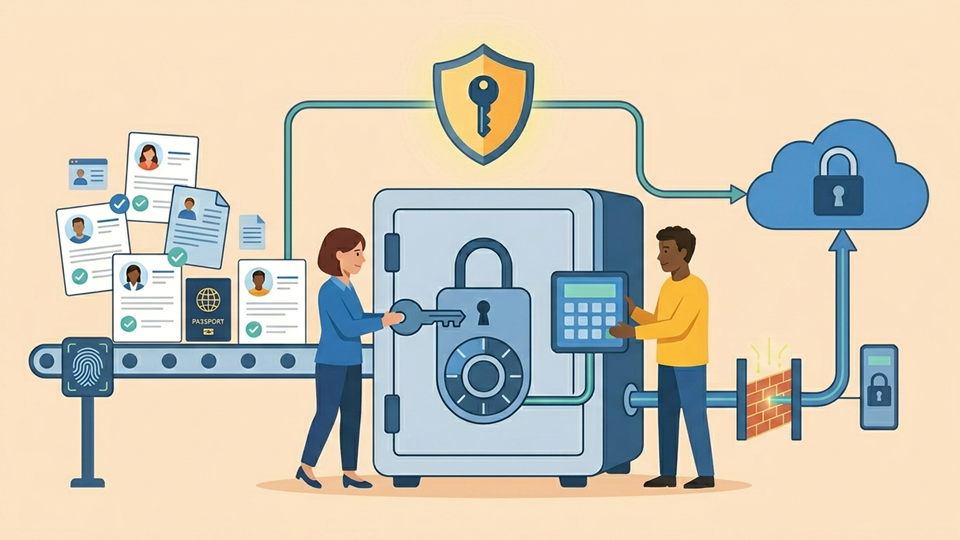
Why candidate data protection has become a strategic business responsibility
Recruitment teams handle a significant amount of sensitive information throughout the hiring process. Resumes, contact details, employment histories, salary expectations, assessment results, interview notes, identification documents, and background screening records all contain personal data that must be managed responsibly. As hiring operations become increasingly digital, organizations face greater expectations from candidates, regulators, and business partners regarding how this information is collected, stored, shared, and protected.
Data privacy is no longer solely an IT or legal concern. It has become a business priority that directly affects employer reputation, candidate trust, and operational risk. A single incident involving unauthorized access or improper handling of candidate information can damage an organization's credibility and create legal and financial consequences.
Modern hiring teams often operate across multiple regions, using applicant tracking systems, assessment platforms, communication tools, and third-party recruitment providers. Each additional system introduces new data management responsibilities. Without clear governance, organizations can quickly lose visibility into where candidate data resides, who can access it, and how long it is retained.
Organizations that prioritize privacy throughout the recruitment lifecycle demonstrate professionalism and accountability. Candidates are increasingly aware of how personal information is used, and many expect the same level of data protection from prospective employers that they receive from financial institutions, healthcare providers, and online services.
Building trust through responsible data handling not only supports compliance objectives but can also strengthen employer branding. Candidates are more likely to engage with organizations that communicate clearly about privacy practices and demonstrate a commitment to protecting personal information.
Establishing clear data governance throughout the hiring process
Effective candidate data protection begins with governance. Hiring teams should understand exactly what information they collect, why they collect it, who can access it, and how it is managed throughout its lifecycle.
Data minimization is one of the most effective practices organizations can implement. Recruitment teams should collect only the information necessary to evaluate candidates and support hiring decisions. Gathering excessive personal information increases compliance risks without providing meaningful business value. For example, requesting sensitive personal details during early recruitment stages may create unnecessary exposure and should generally be avoided unless there is a legitimate business requirement.
Clear consent and transparency processes are equally important. Candidates should understand what information is being collected, how it will be used, whether it may be shared with third parties, and how long it will be retained. Transparent communication helps establish trust while supporting regulatory compliance requirements in many jurisdictions.
Organizations should also define internal ownership for candidate data. HR teams, recruiters, hiring managers, legal departments, and technology teams all play a role in protecting information. Clearly documented responsibilities reduce ambiguity and help ensure that privacy controls are applied consistently.
Retention policies deserve particular attention. Many organizations accumulate years of candidate records without a clear business justification. Maintaining outdated information unnecessarily increases risk. Establishing retention schedules and automated deletion policies helps reduce exposure while ensuring compliance with applicable regulations and business requirements.
Regular audits of recruitment processes can help identify gaps in governance. Reviewing data collection practices, access permissions, storage locations, and third-party integrations allows organizations to address issues before they become compliance concerns.
Strengthening access controls and security measures
Even well-designed privacy policies can fail if candidate data is not adequately protected from unauthorized access. Security controls should be integrated into every stage of the recruitment process.
Role-based access management is one of the most important safeguards. Recruiters, hiring managers, interviewers, and administrators often require different levels of access to candidate information. Limiting access to only the data necessary for specific responsibilities reduces the likelihood of accidental exposure or misuse.
Multi-factor authentication has become a standard security practice for recruitment platforms. Requiring additional verification beyond passwords significantly reduces the risk of unauthorized account access. This protection is particularly important as hiring teams increasingly operate remotely and access systems from multiple locations.
Encryption provides another essential layer of security. Candidate information should be protected both when stored and when transmitted between systems. Modern recruitment platforms typically support encryption technologies that help safeguard sensitive data against interception or unauthorized access.
Organizations should also establish procedures for managing employee departures and role changes. Former recruiters, hiring managers, or external partners should not retain access to candidate information after their responsibilities have ended. Automated access reviews and deprovisioning processes help maintain security over time.
Security awareness training is equally valuable. Many data incidents result from human error rather than technical failures. Recruitment teams should understand phishing risks, secure file-sharing practices, password management expectations, and procedures for reporting potential security concerns.
Periodic security assessments can help organizations validate that controls remain effective. Testing access permissions, reviewing system configurations, and evaluating vendor security practices provide valuable insights into potential vulnerabilities.
Managing compliance across vendors and recruitment technologies
Modern hiring processes rely heavily on technology providers. Applicant tracking systems, assessment tools, video interviewing platforms, background screening services, scheduling applications, and communication platforms may all process candidate information. As a result, vendor management becomes a critical component of compliance.
Organizations should evaluate vendors before sharing candidate data. Security certifications, privacy practices, data processing agreements, incident response procedures, and regulatory compliance capabilities should all be considered during procurement and implementation.
Third-party relationships require ongoing oversight rather than one-time assessments. Technology providers evolve, introduce new features, and occasionally experience security incidents. Periodic reviews help ensure that vendors continue to meet organizational expectations and compliance requirements.
Data transfer considerations are particularly important for organizations hiring internationally. Candidate information may move across countries and regions with different privacy regulations. Recruitment teams should understand where data is stored and how cross-border transfers are managed.
Integration management also deserves attention. Automated workflows often connect multiple systems, creating efficiencies but also expanding the flow of candidate information. Organizations should regularly review integrations to ensure that data sharing remains necessary, appropriate, and properly secured.
Contractual protections play an important role as well. Agreements with recruitment technology providers should clearly define responsibilities regarding data protection, breach notification requirements, access controls, and data deletion procedures.
Building a privacy-first recruitment culture
Technology and policies alone are not sufficient to protect candidate information. Sustainable compliance requires a culture in which privacy considerations are integrated into everyday recruitment activities.
Leadership support is essential. When executives, HR leaders, and recruitment managers prioritize privacy, teams are more likely to adopt consistent practices. Clear expectations help reinforce the importance of responsible data handling throughout the organization.
Privacy should also be incorporated into recruitment process design. Before introducing new assessments, sourcing tools, artificial intelligence capabilities, or workflow automations, organizations should evaluate potential privacy implications. Addressing risks early is often more effective and less costly than implementing corrective measures later.
Candidate communication can further strengthen trust. Organizations that provide clear privacy notices, explain data usage practices, and respond promptly to information requests demonstrate transparency and professionalism. These actions contribute positively to the overall candidate experience.
Continuous improvement remains important as regulations, technologies, and hiring practices evolve. Regular policy reviews, employee training, risk assessments, and process evaluations help organizations maintain strong privacy standards over time.
The most successful hiring teams view data protection as more than a compliance requirement. They recognize it as an opportunity to strengthen trust, reduce operational risk, and support long-term business objectives. For organizations seeking to modernize recruitment while maintaining strong privacy controls, platforms such as Zamdit can help centralize candidate data, improve access management, support compliance workflows, and create a more secure hiring environment.