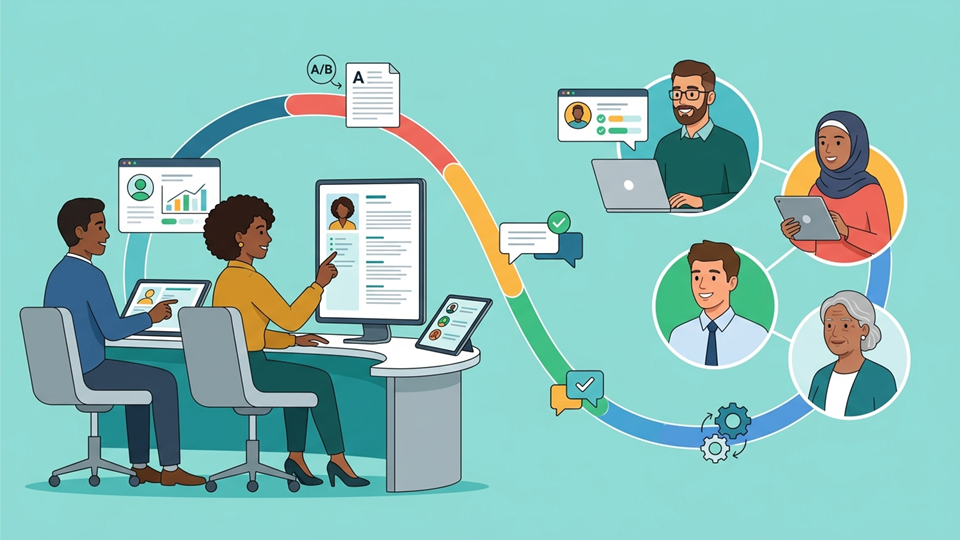
Why traditional hiring practices continue to limit workforce diversity
Many organizations have invested significantly in diversity, equity, and inclusion initiatives over the past decade. However, despite these efforts, hiring outcomes often remain heavily influenced by traditional recruitment practices that unintentionally restrict access to talent. Requirements such as specific degrees, prestigious universities, linear career paths, or particular years of experience frequently exclude highly capable candidates from underrepresented backgrounds.
Traditional hiring models were designed to simplify candidate evaluation by relying on proxies for competence. Educational credentials, employer reputation, and career history became convenient indicators of potential performance. While these factors may provide some information, they often fail to accurately predict job success and can inadvertently reinforce existing workforce inequalities.
For example, highly skilled professionals who have developed expertise through non-traditional education paths, career transitions, military experience, self-directed learning, vocational programs, or practical experience may be excluded before their capabilities are properly assessed. This limitation disproportionately affects candidates from diverse socioeconomic, ethnic, geographic, and educational backgrounds.
Organizations increasingly recognize that talent is distributed broadly, while opportunities to demonstrate that talent are not. As labor markets become more competitive and organizations seek to strengthen workforce diversity, traditional credential-based hiring approaches are proving insufficient.
Skills-based hiring has emerged as a strategic alternative that enables organizations to evaluate candidates based on demonstrated capabilities rather than historical credentials. When combined with diversity and inclusion strategies, this approach creates significant advantages for both employers and candidates.
How skills-based hiring expands access to diverse talent
Skills-based hiring focuses on evaluating candidates according to the competencies, capabilities, behaviors, and practical skills required to perform successfully in a specific role. Rather than prioritizing educational background, employer pedigree, or career chronology, organizations assess whether candidates possess the skills necessary to achieve business outcomes.
This approach naturally broadens access to talent pools that may have been overlooked through traditional recruitment methods. Candidates who acquired expertise through alternative pathways, including professional certifications, bootcamps, apprenticeships, freelance experience, military service, entrepreneurship, or self-learning, become more visible and competitive.
Research across multiple labor markets has demonstrated that removing unnecessary degree requirements can substantially increase candidate diversity. In many industries, degree inflation has created barriers that exclude qualified professionals without improving hiring outcomes. By focusing on demonstrable skills, organizations can access larger and more diverse talent populations.
For example, technology companies have increasingly hired software engineers, cybersecurity specialists, and data analysts based on technical assessments and portfolio evaluations rather than university credentials alone. Similarly, organizations in customer service, operations, marketing, and project management have expanded their talent pipelines by emphasizing practical competencies.
Skills-based hiring also benefits candidates returning to the workforce after career interruptions, including caregivers, veterans, career changers, and individuals re-entering employment after extended absences. These groups often possess valuable transferable skills that traditional hiring processes fail to recognize adequately.
As workforce demographics continue evolving, organizations that prioritize skills over credentials position themselves to access broader and more resilient talent ecosystems.
The business impact of combining diversity and skills-based hiring
Improving talent availability and reducing hiring constraints
One of the most immediate benefits of skills-based hiring is the expansion of available talent pools. Organizations facing persistent skills shortages often discover that restrictive job requirements unnecessarily limit access to qualified candidates.
For example, removing degree requirements from certain roles can increase the number of qualified applicants significantly, depending on the industry and labor market conditions. This expanded access enables organizations to reduce time-to-hire, improve workforce planning, and decrease reliance on highly competitive talent segments.
Diversity initiatives further strengthen this advantage by ensuring that recruitment strategies intentionally reach broader candidate populations. Together, these approaches create more sustainable talent acquisition pipelines while reducing hiring bottlenecks.
Enhancing workforce performance and innovation
Numerous organizational studies have demonstrated that diverse teams often outperform homogeneous teams in problem-solving, innovation, creativity, and decision-making. Skills-based hiring supports these outcomes by focusing recruitment efforts on demonstrated capability rather than traditional assumptions about candidate quality.
When organizations recruit individuals with diverse educational backgrounds, professional experiences, and perspectives, they create environments that encourage innovation and adaptability. Employees who arrive through non-traditional pathways frequently contribute unique approaches to problem-solving and organizational improvement.
For example, teams composed of professionals from multiple industries, educational systems, and cultural backgrounds often demonstrate greater resilience when addressing complex business challenges. Diversity of experience can become a strategic competitive advantage when supported by strong organizational practices.
Strengthening employer branding and candidate experience
Modern candidates increasingly expect organizations to demonstrate commitment to fairness, inclusion, and opportunity. Skills-based hiring practices send a strong message that organizations value capability and potential rather than privilege or historical advantage.
Employers that publicly embrace skills-based recruitment often strengthen their employer brand among younger professionals, career changers, underrepresented groups, and highly skilled candidates seeking equitable opportunities. This perception can improve application rates, candidate engagement, and employee retention.
Additionally, transparent evaluation criteria improve candidate experience by providing greater clarity regarding how hiring decisions are made. Candidates are more likely to perceive recruitment processes as fair when assessment standards are explicit and job-relevant.
Building effective skills-based hiring frameworks
Successfully implementing skills-based hiring requires more than removing degree requirements from job descriptions. Organizations must redesign multiple aspects of their recruitment processes to ensure that skills become the primary evaluation criterion.
The first step involves identifying the competencies that genuinely predict success in each role. Organizations should collaborate with hiring managers, team leaders, high-performing employees, and workforce planners to define critical technical, behavioral, and cognitive skills.
Job descriptions should then be rewritten to prioritize capabilities rather than credentials. Instead of requiring specific educational backgrounds or arbitrary years of experience, organizations should clearly articulate the skills, responsibilities, and outcomes expected from successful candidates.
Assessment methods also require modernization. Structured interviews, work sample tests, simulations, portfolio reviews, technical assessments, and competency-based evaluations provide more reliable indicators of performance than resume screening alone.
Recruiter and interviewer training plays a critical role in successful implementation. Hiring teams must understand how to evaluate skills consistently, recognize transferable competencies, and avoid reverting to traditional proxies for candidate quality.
Organizations should also monitor hiring outcomes through data analysis. Metrics such as candidate diversity, quality of hire, retention rates, performance outcomes, promotion rates, and candidate satisfaction provide valuable insights into the effectiveness of skills-based hiring strategies.
Why skills-based hiring and diversity strategies are becoming inseparable
As organizations face increasing competition for talent, skills shortages, and growing expectations around diversity and inclusion, traditional hiring approaches continue to lose effectiveness. Skills-based hiring and diversity strategies are increasingly viewed not as separate initiatives, but as mutually reinforcing components of modern talent acquisition.
Organizations that successfully combine these approaches gain access to broader talent pools, improve workforce diversity, strengthen innovation capacity, and create more equitable hiring experiences. At the same time, they reduce dependence on outdated hiring criteria that often fail to predict business performance.
Technology is accelerating this transformation by enabling organizations to standardize competency frameworks, automate candidate screening, measure diversity outcomes, and analyze hiring effectiveness at scale. Modern applicant tracking systems provide the infrastructure necessary to operationalize skills-based hiring strategies efficiently.
For organizations seeking to build more diverse, capable, and resilient workforces, the question is no longer whether skills-based hiring should support diversity objectives, but how quickly these strategies can be integrated into everyday recruitment operations. Platforms such as Zamdit help organizations implement structured, skills-focused recruitment processes while supporting diversity initiatives through standardized workflows, data-driven decision-making, and scalable hiring practices.