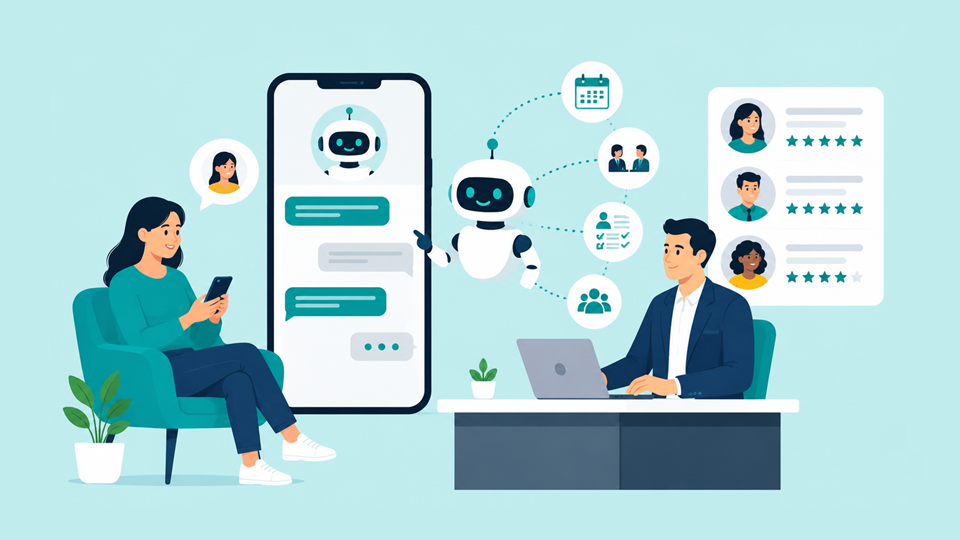
Candidate engagement is becoming a continuous conversation
Candidate engagement has traditionally depended on a series of relatively disconnected interactions. Someone applies, receives an automated confirmation, waits for a recruiter, attends an interview and eventually receives another update. Between those moments, communication can become inconsistent, particularly when recruitment teams are managing hundreds of candidates across multiple vacancies.
Conversational AI is changing this model by allowing organizations to maintain more responsive, contextual interactions throughout the hiring journey. Instead of relying exclusively on static emails, basic chatbots or recruiters manually answering every question, AI-powered systems can understand natural language, respond to common requests and use recruitment context to provide more relevant information.
The distinction from earlier recruitment chatbots is important. Traditional bots generally followed predefined decision trees: choose a topic, select an option and receive a prepared response. Conversational AI can interpret a much wider range of questions. A candidate might ask whether remote working is available, what happens after an assessment, whether an interview can be rescheduled or how long the hiring process normally takes, using their own words rather than navigating a fixed menu.
This capability matters because candidate expectations have changed. People are accustomed to immediate digital experiences in banking, retail, travel and customer service. Recruitment remains unusual when an applicant submits important personal information and then hears nothing for several days. Conversational AI can help close that communication gap without requiring recruiters to remain available around the clock.
The business value is not simply faster responses. Better communication can keep candidates engaged, reduce repetitive administrative work and create a more consistent experience across vacancies. For employers competing for scarce talent, responsiveness can influence whether a candidate remains interested long enough to reach an offer.
Where conversational AI is creating practical value
One of the clearest applications is answering frequently asked questions. Candidates routinely ask about working arrangements, interview stages, application status, benefits, locations, assessments and timelines. Many of these questions do not require recruiter judgment. A conversational system connected to accurate recruitment information can provide immediate answers while escalating unusual or sensitive questions to a person.
Scheduling is another high-friction area. Coordinating interviews can generate multiple messages between candidates, recruiters and hiring managers. Conversational AI can support self-scheduling workflows, explain available options, provide reminders and help candidates understand how to reschedule. Removing several administrative exchanges from every interview can save significant time when recruitment volumes increase.
Application support also offers opportunities. Candidates may abandon applications because they encounter an unclear question, cannot find information about the process or are uncertain whether their experience is relevant. An AI assistant can provide contextual guidance without completing assessments or making decisions for them. For example, it can explain what information a particular application section requires or clarify what documentation needs to be uploaded.
Conversational AI can also support candidate re-engagement. Applicant Tracking Systems often contain large pools of previous applicants, sourced candidates and people who reached advanced stages for earlier vacancies. Instead of treating these records as historical data, recruiters can reconnect with relevant candidates when new opportunities appear. AI can help personalize initial communication using appropriate information about previous interactions, skills and interests.
For example, a candidate who previously interviewed for a senior account management position but was not selected might later match a new commercial role. A contextual message acknowledging the previous process and explaining why the new opportunity could be relevant is considerably stronger than a generic bulk email. AI can help recruiters create that communication efficiently, while the recruiter retains control over who is contacted.
Multilingual engagement is another significant opportunity for international employers. Conversational systems can make basic recruitment information accessible across languages without requiring every recruiting team to operate multilingual support. Human review and carefully maintained terminology remain important, particularly for contractual, legal or culturally sensitive communication, but AI can reduce many routine language barriers.
Personalization without losing the human relationship
The strongest use of conversational AI is not to make recruitment appear human when no human is involved. It is to use automation where it improves responsiveness while preserving genuine human interaction where judgment, empathy and persuasion matter. Candidates should understand when they are interacting with an automated system and have a clear route to contact a recruiter when necessary.
Personalization can go significantly beyond inserting a candidate's first name into a template. When recruitment systems contain structured information about vacancies, application stages, interviews and previous interactions, AI can use that context to make communication more relevant. A candidate awaiting a technical assessment needs different information from someone preparing for a final leadership interview.
However, personalization should have boundaries. Just because a system can analyze large amounts of candidate information does not mean every piece of data should influence a conversation. Organizations need clear rules governing which information can be used, how long it is retained and which decisions require human involvement. Candidates should not encounter messages that feel intrusive because an AI system has inferred information they never knowingly provided for that purpose.
Recruiters also need to consider tone. A conversational system representing the employer becomes part of the employer brand. Excessively enthusiastic responses can feel artificial, while overly formal communication can make the experience impersonal. Organizations should define communication principles that reflect their culture and test how the system handles common questions, uncertainty, complaints and requests it cannot answer.
Escalation is particularly important. Questions about compensation negotiations, accommodations, visa circumstances, complaints, assessment disputes or complex personal situations should not disappear into automated conversations. The system should recognize when human judgment is appropriate and make escalation simple. A good candidate experience depends as much on knowing when not to automate as on automation itself.
AI engagement needs governance and measurable outcomes
Introducing conversational AI without clear ownership can create new problems. Recruitment information changes frequently. Vacancies close, salary ranges change, policies evolve and interview processes are redesigned. If an AI assistant relies on outdated information, it can provide incorrect answers confidently and damage candidate trust.
Recruitment teams therefore need controlled sources of information and responsibility for keeping them current. Answers about a vacancy should be grounded in approved job information rather than generated from assumptions. Organizations should also retain conversation histories where appropriate so recruiters can understand what candidates have already asked and avoid forcing them to repeat information when a human takes over.
Privacy, security and regulatory requirements need equal attention. Candidate conversations can contain personal information, employment history and potentially sensitive details. Organizations should understand how conversational data is processed, who can access it and how retention policies apply. AI should support the recruitment process without creating an uncontrolled secondary database of candidate information.
Performance should be measured using recruitment outcomes rather than the number of AI conversations. Useful indicators include response time, candidate drop-off, scheduling completion, application completion, recruiter administrative workload, candidate satisfaction and conversion between recruitment stages. Teams can also monitor how often conversations require escalation and which questions repeatedly cannot be answered.
Those insights can improve the wider recruitment operation. If hundreds of candidates ask the same question about hybrid working, the job description may be missing important information. If candidates repeatedly need help understanding an assessment, the instructions may need improvement. Conversational data can reveal friction that traditional recruitment reporting does not capture.
From recruitment automation to intelligent candidate relationships
The long-term opportunity for conversational AI is broader than deploying a chatbot on a careers page. As recruitment systems become more connected, conversational interfaces can become another way for candidates and recruiters to interact with the hiring process across applications, interviews, talent pools and future opportunities.
That could mean automatically providing relevant preparation information when an interview is confirmed, answering questions about the next stage, reconnecting with previous candidates when suitable vacancies appear or helping recruiters maintain relationships with promising people who are not ready to move immediately. The experience becomes less transactional and more continuous.
The competitive advantage will not come from automating the largest possible percentage of candidate communication. Organizations will gain more by identifying where speed and availability matter, then protecting human interaction where it adds the greatest value. Recruiters remain essential for understanding motivation, building relationships, resolving uncertainty and ultimately persuading strong candidates to join.
For organizations using Zamdit, a modern Applicant Tracking System can provide the structured candidate, vacancy and recruitment data needed to support more intelligent engagement. Combining centralized recruitment workflows with responsible AI creates opportunities to communicate faster and more consistently while keeping recruiters connected to the people behind each application.
Conversational AI is therefore changing candidate engagement less by replacing conversations and more by removing the silence between them. When implemented with accurate data, sensible governance and clear human escalation, it can make recruitment more responsive without making it less personal.