Why the distinction matters for modern recruiting teams
As hiring becomes more competitive, organizations are investing in technology to improve efficiency, candidate engagement, and hiring outcomes. Two terms that frequently appear in recruitment technology discussions are Recruitment CRM and ATS. While they are sometimes used interchangeably, they solve different problems and support different stages of the talent acquisition process.
Understanding the distinction is important because selecting the wrong solution can create operational bottlenecks, limit visibility into recruitment activities, and reduce a company's ability to attract top talent. In many cases, organizations evaluate software expecting one type of functionality while actually needing another.
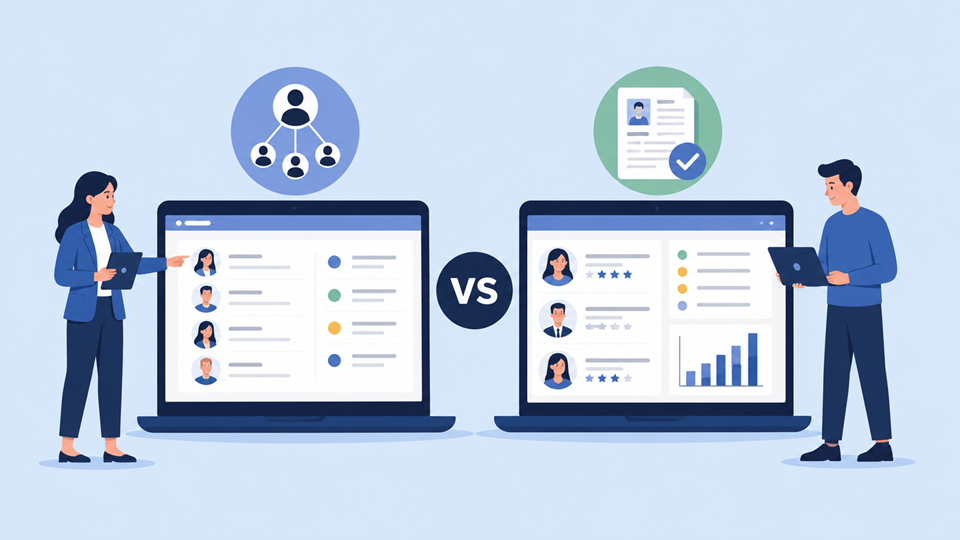
An Applicant Tracking System (ATS) is primarily designed to manage active hiring processes. It helps recruiters organize applicants, move candidates through hiring stages, coordinate interviews, collect feedback, and manage recruitment workflows. The ATS serves as the operational hub where hiring teams track candidates from application to hiring decision.
A Recruitment CRM, on the other hand, focuses on relationship building before candidates apply. It is designed to help organizations identify, engage, nurture, and maintain relationships with potential candidates over time. Instead of managing active applicants, a CRM supports talent pipeline development and long-term candidate engagement.
The distinction becomes particularly important when hiring volume increases. A growing company may receive hundreds of applications for open positions while simultaneously building relationships with passive candidates who may become relevant months later. Managing both activities effectively requires different capabilities, processes, and data structures.
Many organizations initially rely on spreadsheets, email folders, and disconnected tools to manage these activities. However, as recruitment operations scale, the lack of centralized visibility often creates inefficiencies, duplicate work, and missed opportunities. Understanding where an ATS ends and where a CRM begins helps organizations build a more effective recruiting infrastructure.
What an ATS is designed to do
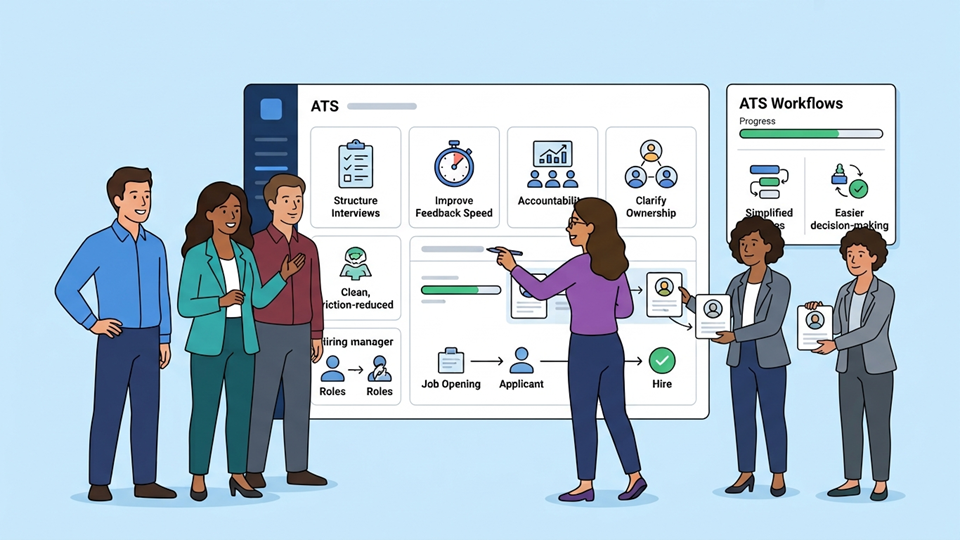
An ATS focuses on managing active recruitment processes. Once a candidate applies for a role, the ATS becomes the primary system for tracking progress throughout the hiring lifecycle. Recruiters use it to review applications, organize candidates, schedule interviews, collect evaluations, and make hiring decisions.
The main objective of an ATS is operational efficiency. Hiring teams need visibility into every open position, candidate status, interview stage, and pending action. Without a centralized system, communication becomes fragmented and hiring processes become difficult to manage consistently.
Consider a company hiring ten software engineers simultaneously. Recruiters need to know which candidates have completed screening calls, which are waiting for technical assessments, which have received offers, and which have been rejected. An ATS provides that visibility through structured workflows and centralized records.
Modern ATS platforms also support collaboration between recruiters and hiring managers. Interview feedback can be collected in one place, approvals can be tracked, and decision making becomes more transparent. This reduces delays and improves accountability throughout the hiring process.
Reporting is another important capability. Organizations can monitor time to hire, source effectiveness, pipeline conversion rates, and recruiter productivity. These metrics help leadership identify bottlenecks and improve hiring performance over time.
For organizations focused on filling open positions efficiently, the ATS is often the foundation of their recruitment technology stack. It creates structure around active hiring activities and ensures candidates move through a consistent process.
Where a Recruitment CRM adds value
While an ATS manages applicants, a Recruitment CRM manages relationships. Its primary purpose is helping organizations engage talent before a hiring process officially begins.
Many of the best candidates are not actively searching for jobs. Industry studies frequently suggest that passive candidates represent a significant portion of the workforce. Waiting for these individuals to submit applications often means losing access to valuable talent. A CRM helps organizations build relationships with those candidates before an immediate hiring need exists.
For example, a company may identify experienced software developers at industry events, through referrals, or via professional networks. Even if there is no suitable opening today, those individuals may become strong candidates in the future. A Recruitment CRM allows recruiters to store profiles, track interactions, segment talent pools, and maintain engagement over time.
Talent communities are another common CRM use case. Instead of relying exclusively on job postings, organizations create pools of interested professionals who receive updates, content, event invitations, and future opportunities. This approach reduces sourcing effort when new vacancies arise.
Recruitment marketing activities are often supported through CRM functionality as well. Personalized outreach campaigns, automated communication sequences, talent newsletters, and candidate nurturing initiatives help organizations remain visible to potential candidates.
A CRM also provides insights into long-term sourcing effectiveness. Recruiters can evaluate engagement rates, campaign performance, and talent pool growth to understand which activities generate the strongest future hiring opportunities.
Organizations operating in highly competitive industries often discover that proactive relationship building provides a significant advantage. By the time a position opens, they already have a network of qualified individuals familiar with the company and interested in future opportunities.
Do organizations need both systems?
The answer depends on hiring volume, recruiting maturity, and business objectives. Smaller organizations with occasional hiring needs may initially operate successfully using a robust ATS alone. Their primary challenge is managing active applicants rather than maintaining large talent communities.
As organizations grow, however, recruiting often becomes more proactive. Instead of waiting for applications, companies begin building pipelines for critical roles, future expansion plans, and specialized skill sets. At that point, CRM functionality becomes increasingly valuable.
The challenge is that operating separate systems can create data silos. Candidate information may exist in multiple locations, reporting becomes fragmented, and recruiters spend time switching between platforms. This can reduce efficiency rather than improve it.
As a result, many modern recruitment platforms combine ATS and CRM capabilities within a single solution. Recruiters can manage active applicants while also maintaining long-term relationships with passive candidates. This creates a unified view of the entire candidate lifecycle.
For example, a candidate may first enter the system through a networking event. Months later, they engage with a recruiting campaign. Eventually they apply for an open position. With integrated functionality, the complete history remains available in one place rather than being distributed across multiple systems.
This unified approach also improves reporting. Organizations can analyze how sourcing activities influence hiring outcomes, measure candidate engagement before application, and identify which talent pools generate the strongest hires.
Companies increasingly seek platforms that support both recruitment operations and relationship management because talent acquisition has become a continuous process rather than a series of isolated hiring events.
Choosing the right approach for long-term growth
When evaluating recruitment technology, organizations should begin by identifying their biggest challenges. If managing applicants, interview processes, and hiring workflows is the primary concern, ATS capabilities should be the priority. If attracting passive talent and building future candidate pipelines are major objectives, CRM functionality becomes equally important.
Leadership should also consider future growth. Technology decisions that support current hiring needs may become limiting as recruitment volumes increase. Investing in a platform that can support both operational recruiting and talent relationship management often reduces future migration costs and implementation complexity.
Another important consideration is data visibility. Recruitment leaders increasingly rely on analytics to guide hiring decisions. Centralized candidate data improves reporting accuracy, enhances forecasting, and provides better insight into recruitment performance.
The most effective recruitment technology strategy is rarely about choosing ATS or CRM. Instead, it is about ensuring that candidate relationships and hiring operations work together seamlessly. Organizations that successfully connect sourcing, engagement, pipeline management, and hiring execution are often better positioned to compete for talent.
Modern platforms such as Zamdit reflect this evolution by helping organizations manage recruitment workflows while maintaining visibility across the broader talent acquisition process. As recruiting becomes increasingly relationship driven and data focused, having a unified approach can improve efficiency, strengthen candidate experiences, and support sustainable hiring growth.