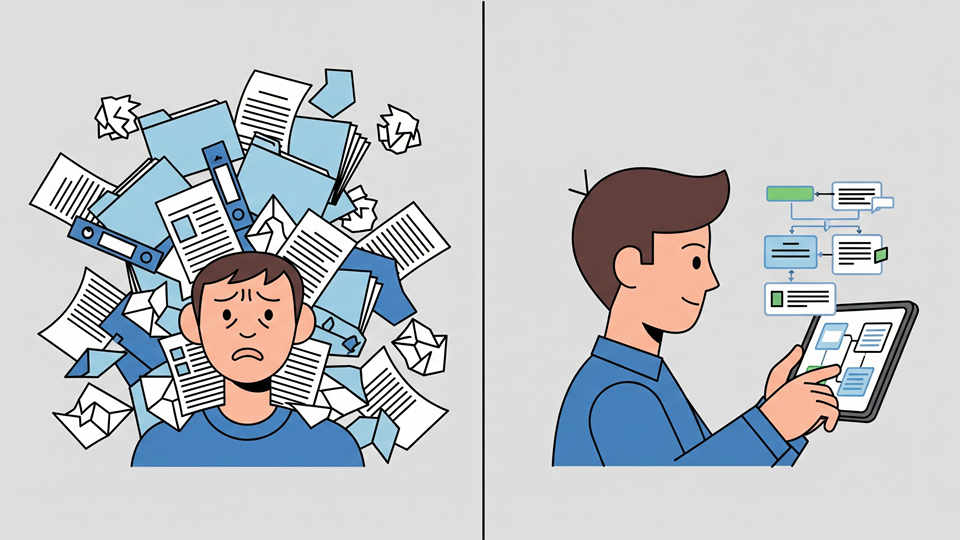
Hiring is one of the most important activities in any growing company, yet it is also one of the most chaotic. Many teams begin with good intentions, but as soon as hiring volume increases, things start to slip. Emails get lost, candidates wait too long for feedback, and decisions become inconsistent. What once felt manageable quickly turns into a fragmented and stressful process.
The root of this chaos is not a lack of effort. It is a lack of structure. Early stage teams often rely on memory, spreadsheets, and informal communication channels. While this may work when hiring one or two people, it breaks down when multiple roles are open at the same time.
For example, imagine a startup hiring for three positions simultaneously. One candidate is being tracked in a spreadsheet, another through email threads, and a third through Slack messages. There is no single source of truth. As a result, interviews get double booked, feedback is delayed, and strong candidates lose interest.
This situation is more common than most teams realize. According to industry data, a large percentage of candidates drop out of hiring processes due to slow communication or lack of clarity. In competitive markets, even a delay of a few days can result in losing top talent.
Understanding why hiring feels chaotic is the first step toward fixing it. The next step is recognizing the signs before the problem escalates.
Signs your hiring process is breaking down
Chaos in hiring rarely appears overnight. It builds gradually, often unnoticed, until it starts affecting results. Recognizing early warning signs can help you take action before your team becomes overwhelmed.
One of the most common signs is slow communication. If candidates are waiting several days for updates, it is a clear indication that your process lacks coordination. This not only frustrates candidates but also damages your employer brand.
Another sign is inconsistent evaluation. When different team members assess candidates using different criteria, decisions become subjective and unreliable. This can lead to hiring mistakes or unnecessary delays in decision making.
Duplicate work is another red flag. If multiple people are reviewing the same resumes without knowing it, or asking the same questions in interviews, your team is wasting valuable time. This often happens when there is no centralized system to track candidate progress.
Missed follow ups are also a major issue. Candidates who do not receive timely responses are more likely to disengage. In some cases, they may accept other offers simply because the process felt smoother elsewhere.
Finally, a lack of visibility across the team creates confusion. Hiring managers, recruiters, and founders may all have partial information, but no one has the full picture. This leads to misalignment and slower decision making.
The hidden cost of disorganized hiring
The impact of chaotic hiring goes beyond inconvenience. It has real consequences for your business. One of the most significant costs is the loss of top candidates. High quality candidates are often evaluating multiple opportunities at once. If your process feels disorganized, they may interpret it as a reflection of your company culture.
Another cost is time. Hiring already requires a significant investment of effort. When processes are inefficient, this effort increases dramatically. Teams spend more time coordinating interviews, searching for information, and correcting mistakes instead of focusing on evaluating candidates effectively.
There is also a financial cost. Vacant roles can slow down product development, delay projects, and reduce overall productivity. The longer it takes to fill a position, the greater the impact on your business performance.
Additionally, disorganized hiring can affect team morale. When employees are involved in a chaotic process, it creates frustration and fatigue. Over time, this can lead to disengagement and reduced collaboration.
For example, a growing agency may need to hire quickly to meet client demand. If their hiring process is slow and inconsistent, they may fail to onboard the necessary talent in time. This can result in missed deadlines, unhappy clients, and lost revenue.
These hidden costs make it clear that improving your hiring process is not just a nice to have. It is a strategic priority.
How to bring structure to your hiring process
Fixing chaotic hiring does not require a complete overhaul overnight. Instead, it involves introducing simple structures that improve clarity, consistency, and collaboration.
The first step is defining a clear hiring workflow. This means outlining each stage of the process, from application to offer, and ensuring that everyone involved understands their role. A defined workflow reduces confusion and helps keep candidates moving forward.
Standardizing evaluation criteria is another key improvement. By using consistent criteria for all candidates, your team can make more objective decisions. This also makes it easier to compare candidates and reach consensus.
Centralizing candidate information is critical. All relevant data, including resumes, interview notes, and feedback, should be stored in one place. This eliminates the need to search across multiple tools and ensures that everyone has access to the same information.
Improving communication is also essential. Setting clear expectations for response times and using templates for common messages can help maintain consistency. For example, sending a follow up email within 24 to 48 hours after an interview can significantly improve the candidate experience.
Another practical step is assigning clear ownership. Each candidate should have a designated owner responsible for moving them through the process. This reduces the risk of tasks being overlooked.
Finally, tracking key metrics can provide valuable insights. Metrics such as time to hire, candidate drop off rate, and interview to offer ratio can help you identify bottlenecks and areas for improvement.
From reactive hiring to a scalable system
As your company grows, the complexity of hiring will increase. What worked for a small team will not scale indefinitely. Transitioning from a reactive approach to a structured system is essential for long term success.
A scalable hiring system allows your team to handle multiple roles efficiently without sacrificing quality. It provides visibility across the entire process, enabling better coordination and faster decision making.
For example, a startup that initially managed hiring through spreadsheets may find that this approach becomes unmanageable as they expand. By adopting a more structured system, they can streamline workflows, improve collaboration, and reduce manual work.
This is where tools like Zamdit can play a role. By centralizing candidate data, standardizing workflows, and improving team collaboration, Zamdit helps reduce the chaos that often comes with growing hiring needs. Instead of reacting to problems as they arise, teams can operate with clarity and confidence.
Ultimately, the goal is not to eliminate complexity but to manage it effectively. Hiring will always involve multiple stakeholders and moving parts. The difference lies in having a system that brings order to that complexity.
By recognizing the signs of chaotic hiring and taking proactive steps to address them, your team can build a more efficient, consistent, and scalable process. This not only improves your chances of hiring the right people but also creates a better experience for everyone involved.