Why Interview Training Matters More Than Ever
Companies rely heavily on hiring managers to identify talent that will strengthen teams, elevate performance, and support long term growth. Yet many hiring managers receive little formal training on how to interview well. This often leads to inconsistent evaluations, decisions influenced by bias, and poor candidate experiences. A structured training program changes this by giving hiring managers a clear understanding of what good interviewing looks like, how to assess candidates in a fair and repeatable way, and how to ask questions that reveal true potential.
Research shows that companies with standardized interview training improve quality of hire and reduce turnover. Many high growth organizations report that interview consistency becomes even more important once they start scaling. When every manager uses different criteria, the company loses clarity about what a successful hire looks like. This guide explains how to train hiring managers so they perform interviews with confidence, accuracy, and professionalism.
Build a Foundation Based on Clear Competencies
Define what success looks like for each role
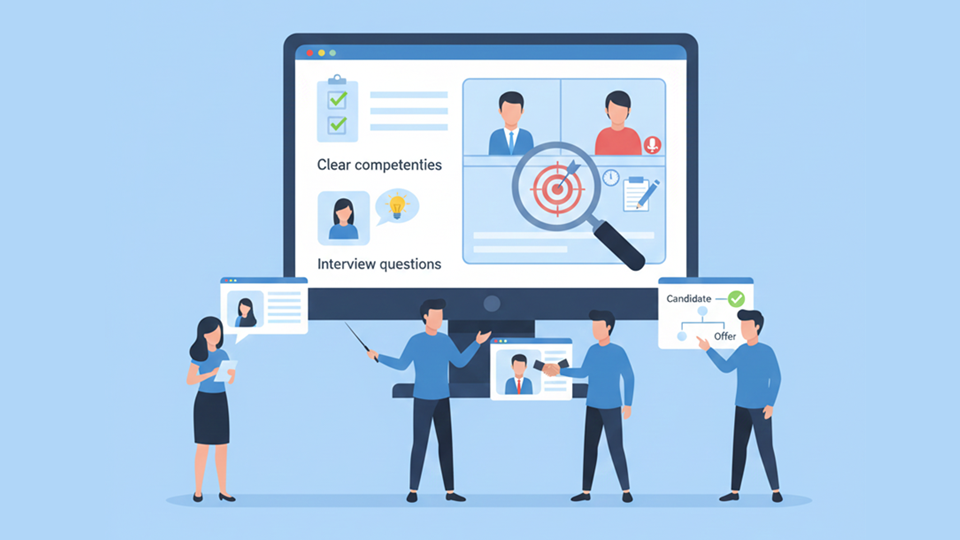
A strong training program begins with clear role competencies. Hiring managers need to understand which skills, behaviors, and values indicate success. Without this foundation, interviews can drift into personal preferences instead of objective assessment.
Start by defining three categories of competencies: technical abilities, behavioral traits, and cultural alignment. Provide examples for each category so managers can visualize what strong, average, and weak performance looks like. For instance, a project manager may need strong prioritization skills, comfort with deadlines, and collaborative communication. A customer success specialist may require empathy, patience, and conflict resolution ability.
Give managers structured scorecards
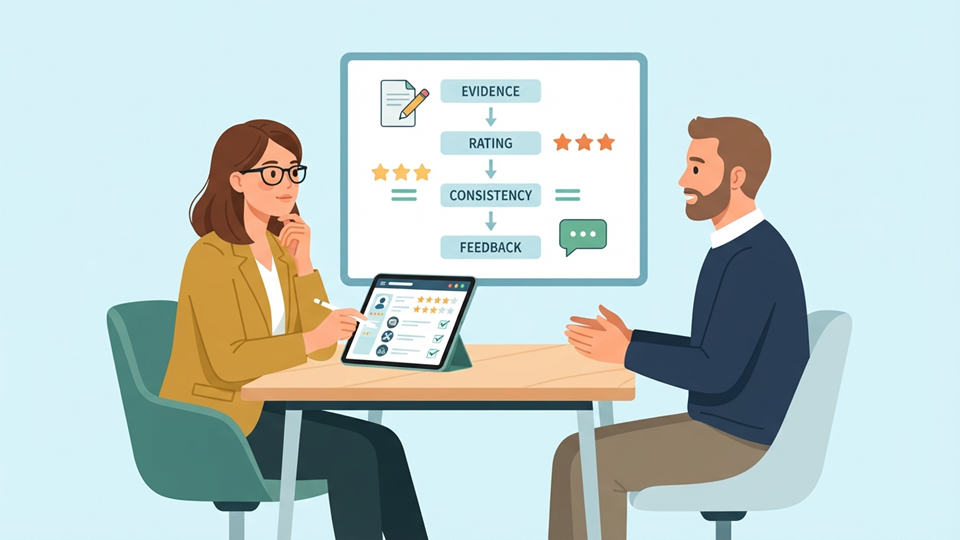
Scorecards reinforce consistency. They outline the key competencies and give managers a simple way to document evidence. During training, walk through sample scorecards to show how to record observations instead of personal impressions. For example, instead of writing that a candidate seems confident, managers should note specific behaviors such as maintaining eye contact, providing clear explanations, or handling follow up questions with ease.
Teach the Art of Asking Better Questions
Use behavioral questions as the foundation
Behavioral questions help reveal how a candidate acts in real situations. They reduce guesswork because past behavior is one of the best predictors of future performance. Training should include practical guidance on how to design questions that start with prompts like "Tell me about a time when" or "Describe a situation where you had to".
Show managers how to evaluate answers using the STAR method, which looks at situation, task, action, and result. Provide several examples during training. Suppose the question asks about handling conflict. A strong answer would describe a specific conflict, explain what the candidate needed to accomplish, outline the steps they took to resolve the issue, and conclude with the outcome.
Add situational questions for deeper insight
Situational questions test how candidates think. They are not based on past experience but on hypothetical scenarios that reflect common tasks of the role. For example, a hiring manager for a sales team may ask how a candidate would handle a stalled pipeline or how they would prioritize inbound leads. Good training includes exercises where managers practice writing and scoring situational questions that match real challenges within the organization.
Train managers to ask fair and legally safe questions
Another goal is protecting the organization from risk. Many hiring managers are unaware that certain questions can lead to discrimination claims. Training should highlight which topics are off limits, such as personal family details, citizenship status, and age. Provide alternatives that still deliver useful information without entering unsafe territory. For example, instead of asking whether a candidate has children, a manager can ask whether they can meet the schedule demands of the role.
Improve Consistency Through Structured Interview Formats
Use standardized interview stages
Managers perform better when every interview follows a predictable structure. Provide a simple format such as a short introduction, an explanation of the role, a series of behavioral and situational questions, time for candidate questions, and a clear closing. This format makes interviews smoother, reduces nerves for newer managers, and leads to better evaluations.
Encourage note taking during the interview
Many managers believe they can remember all important details without notes. In reality, candidates blur together when many interviews take place in a single week. Training should include note taking tips such as writing short phrases, capturing quotes when relevant, and marking examples that match the scorecard competencies. Notes help justify final decisions and make panel discussions far more productive.
Explain how to manage panel interviews
Panel interviews can enrich the evaluation process because they combine different perspectives. They can also create confusion if panelists do not coordinate. Training should show managers how to assign roles, rotate question responsibilities, and organize debriefs. For example, one panelist may focus on technical skills, another on teamwork, and another on value alignment. Coordination improves fairness and reduces candidate stress.
Reduce Bias Through Practical Awareness Training
Teach managers how bias appears in interviews
Bias often operates silently. Interview training must help managers recognize common patterns, such as favoring candidates with similar backgrounds, forming premature judgments, or focusing too heavily on charisma. Provide examples of how bias influences decisions. For instance, a candidate who shares a hobby with the interviewer may receive unintentional preference.
Offer tools to minimize bias
Techniques like structured scorecards, consistent questions, and independent scoring can greatly reduce bias. Training should encourage managers to take a short pause before making decisions, review evidence objectively, and compare candidate performance directly against competencies rather than personal preferences.
Provide Real Practice Sessions
Use mock interviews for active learning
Mock interviews are one of the most effective training components. They allow hiring managers to practice asking questions, taking notes, and using scorecards. Choose realistic scenarios so the training feels relevant. Assign participants to switch roles between interviewer, candidate, and observer. Observers can give feedback on clarity, pacing, and fairness.
Share examples of good and poor interview behavior
Examples make training more memorable. Show clips or reenact scenarios where interviewers interrupt candidates, fail to probe deeper, or ask unclear questions. Then contrast this with strong examples where managers listen carefully, guide the conversation, and gather evidence rather than assumptions.
Evaluate Progress and Provide Continuous Improvement
Collect feedback from hiring managers
Ask managers which parts of the training help them the most and where they still feel uncertain. This insight helps refine the program. Many organizations discover that managers want more practice with difficult conversations, such as rejecting a candidate politely or handling unexpected candidate questions.
Monitor outcomes across real interviews
Track whether trained managers conduct more consistent interviews, whether candidates rate the process more positively, and whether hiring decisions align more closely with performance outcomes. Use these insights to identify gaps and introduce refreshers.
Conclusion: Equip Managers With the Right Tools
Well trained hiring managers improve candidate experience and help companies make better decisions. A structured training program provides clarity, fairness, and repeatable processes. Tools like competency frameworks, scorecards, and consistent formats turn interviews into reliable evaluations instead of improvised conversations. Platforms like Zamdit give teams an organized way to manage interviews, share feedback, and standardize processes, which strengthens hiring quality across the organization.