Introduction
Choosing the right interview format is crucial for effective hiring. Structured and unstructured interviews each have advantages and limitations. Understanding the differences helps recruiters select the approach that provides reliable, fair, and actionable insights while improving candidate experience.
What Are Structured Interviews?
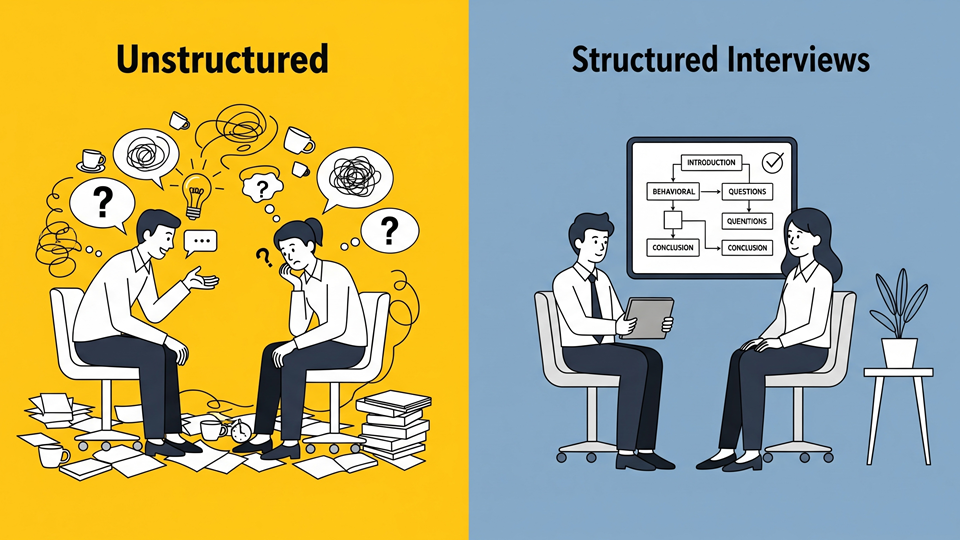
Structured interviews involve standardized questions, scoring rubrics, and consistent evaluation criteria. Every candidate is asked the same questions in the same order, allowing objective comparison. Research by the Harvard Business Review shows that structured interviews are 50% more predictive of job performance than unstructured interviews.
Advantages of Structured Interviews
- Reduces interviewer bias
- Ensures fair and consistent evaluation
- Facilitates data-driven hiring decisions
- Improves compliance with labor regulations
What Are Unstructured Interviews?
Unstructured interviews are conversational and flexible, with no predetermined set of questions. Interviewers adapt questions based on the candidate’s responses. This format allows a more natural flow and can reveal cultural fit or interpersonal skills effectively.
Advantages of Unstructured Interviews
- Encourages open-ended dialogue
- Builds rapport and candidate comfort
- Reveals insights about personality and soft skills
Key Considerations for Choosing a Format
When deciding between structured and unstructured interviews, consider:
- Role complexity: Highly technical or critical roles benefit from structured interviews for consistency.
- Candidate volume: Large applicant pools are easier to evaluate with structured formats.
- Soft skills assessment: Unstructured interviews allow exploration of personality, communication, and culture fit.
- Legal compliance: Structured interviews reduce the risk of discrimination claims.
Hybrid Approach
Many organizations adopt a hybrid model. Start with structured questions to evaluate key competencies, then include unstructured segments to assess interpersonal skills, motivation, and cultural fit. This approach combines the benefits of both methods while minimizing weaknesses.
Best Practices
- Train interviewers on scoring rubrics and unconscious bias
- Document candidate responses thoroughly
- Use technology to track and analyze results
- Provide consistent feedback loops for hiring managers
Conclusion
Choosing between structured and unstructured interviews depends on the role, candidate pool, and hiring goals. A hybrid approach often delivers the best balance, ensuring objective evaluation of core skills while allowing flexibility to explore soft skills and cultural fit. Implementing best practices ensures a fair, efficient, and predictive hiring process.