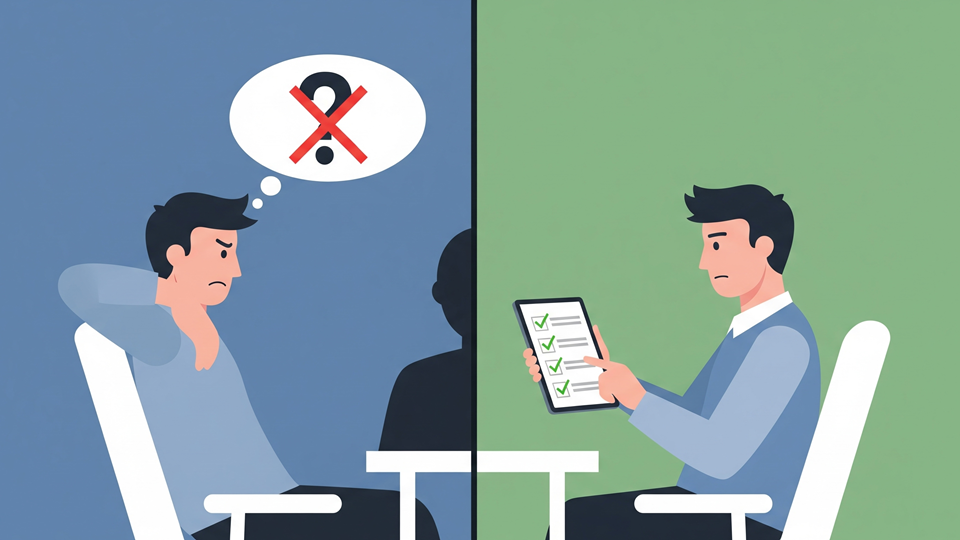
Common Interview Mistakes and How to Avoid Them
Learn the most common interview mistakes and how to avoid them. Improve your hiring process with structured questions, objective evaluation, and attention to both skills and cultural fit.
Read More

Bias in hiring remains one of the most significant challenges for organizations. While unconscious bias is difficult to eliminate completely, structured interviews provide a proven method to reduce its impact. Unlike unstructured conversations that rely heavily on intuition, structured interviews use consistent criteria and standardized processes. This ensures fairer evaluations, enhances decision-making, and ultimately helps companies build more diverse and capable teams.
A structured interview is a systematic method of evaluating candidates where each applicant is asked the same set of predetermined questions in the same order. Answers are scored using a standardized rubric. This approach creates uniformity in the evaluation process, minimizing subjectivity and guesswork.
Start by identifying the skills, qualifications, and behaviors essential for the role. For example, a sales manager role may require competencies like negotiation, leadership, and resilience. Document these clearly before designing questions.
Use behavioral and situational questions tailored to the competencies. For instance:
Avoid vague or overly broad questions like “Tell me about yourself,” as they leave too much room for bias.
Design a scale (e.g., 1–5) with clear descriptions for each score. For example:
This ensures interviewers evaluate based on merit rather than instinct.
Even with structured formats, interviewer bias can creep in. Training helps interviewers apply rubrics consistently, recognize unconscious bias, and follow the process. According to the Harvard Business Review, companies that trained interviewers in structured methods saw a 25% improvement in hiring fairness and accuracy.
Panel interviews or multiple rounds with different interviewers reduce the weight of any single person’s bias. Ideally, include interviewers from diverse backgrounds to provide balanced perspectives.
Keep detailed notes of each candidate’s responses and scores. After the interview, compare results against the rubric rather than impressions. This documentation also provides legal protection if hiring decisions are challenged.
Organizations like Google and Deloitte have long relied on structured interviews. A 2020 meta-analysis in the Journal of Applied Psychology found that structured interviews improved prediction of job performance by 44% compared to unstructured interviews. These results demonstrate why structured methods are increasingly becoming best practice in recruitment.
Structured interviews offer a clear path to fairer and more effective hiring. By standardizing questions, using rubrics, and training interviewers, organizations can significantly reduce bias and make better hiring decisions. Not only does this create stronger teams, but it also strengthens the employer brand by demonstrating a commitment to fairness and inclusion.
Learn the most common interview mistakes and how to avoid them. Improve your hiring process with structured questions, objective evaluation, and attention to both skills and cultural fit.
Read More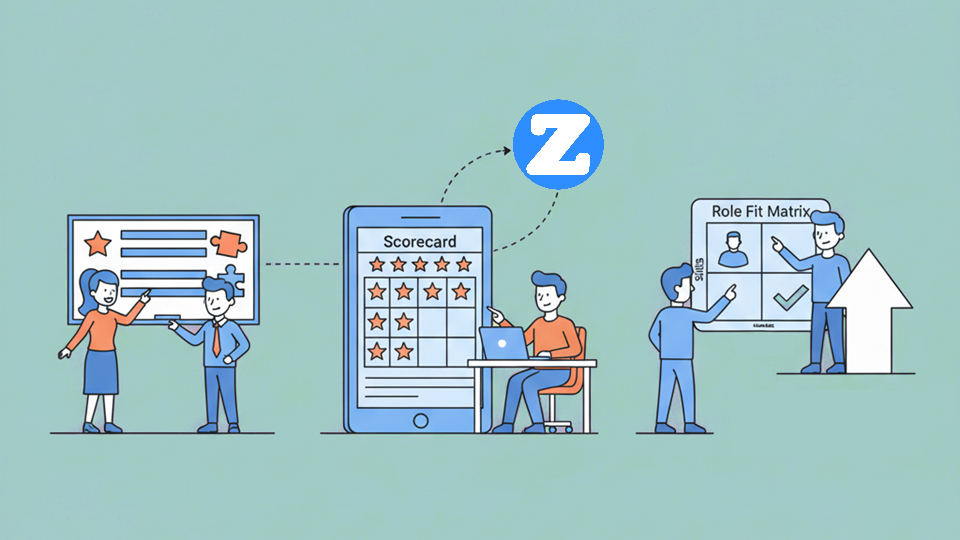
Discover proven interview frameworks like STAR, Scorecards, and Role Fit Matrices that help identify the right candidates faster. Learn how tools like Zamdit make interviews structured, fair, and data-driven.
Read More
Learn how to use behavioral interview questions to assess soft skills effectively. Discover methods, examples, and best practices to evaluate communication, teamwork, and problem-solving abilities.
Read MoreZamdit brings together every tool you need to find, assess, and hire top talent faster, smarter, and with complete clarity.
No credit card required