
Common Interview Mistakes and How to Avoid Them
Learn the most common interview mistakes and how to avoid them. Improve your hiring process with structured questions, objective evaluation, and attention to both skills and cultural fit.
Read More
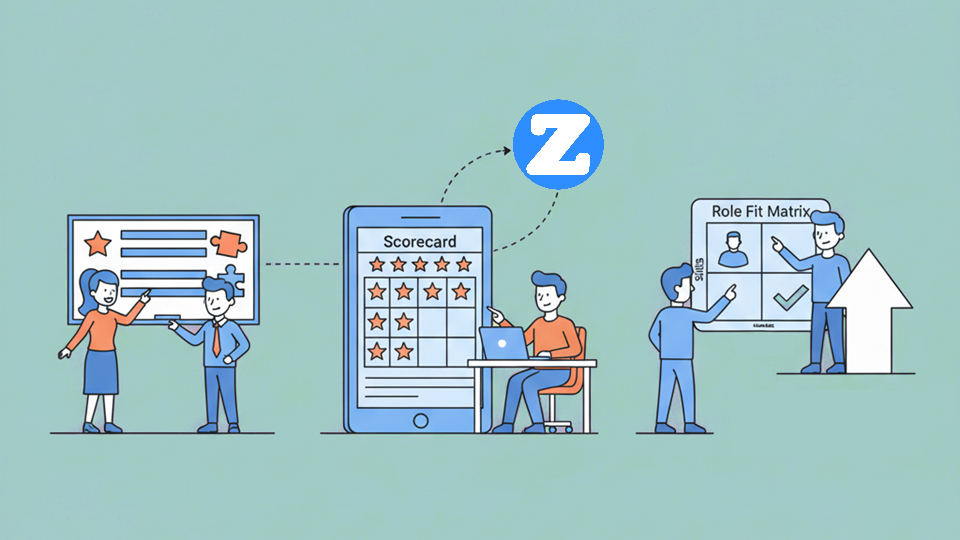
Interviewing candidates is both an art and a science. While intuition can help spot strong personalities, the real key to hiring success lies in using structured frameworks that make interviews more consistent, objective, and predictive. In fact, research by Google found that structured interviews are twice as effective at predicting job performance compared to unstructured ones. If your hiring process feels unpredictable or inconsistent, it's time to rethink your approach.
This article explores practical frameworks and proven techniques that help recruiters and hiring managers identify the right fit faster, without compromising quality. Whether you're building your first interview process or refining an existing one, these insights will help you elevate every conversation you have with a candidate.
Structured interviews are designed to create consistency across candidates by using standardized questions, scoring criteria, and evaluation methods. This approach reduces bias and ensures decisions are based on merit rather than intuition.
With Zamdit, recruiters can automate this process by creating interview templates, assigning structured scorecards, and tracking performance indicators across roles and hiring cycles. The platform ensures every interviewer follows the same standardized process, a must for growing teams.
The STAR method (Situation, Task, Action, Result) is one of the most widely used frameworks for behavioral interviews. It helps candidates provide structured responses and allows interviewers to evaluate them consistently.
Ask candidates to describe specific examples of past experiences using this formula:
For example, instead of asking “Are you a good problem-solver?”, ask “Tell me about a time you solved a challenging problem under tight deadlines.” The STAR framework ensures you receive actionable insights instead of vague opinions.
Another effective model is the Scorecard Interview Framework. This method assigns quantitative scores to core competencies, making it easier to compare candidates objectively.
This method is especially powerful when multiple interviewers are involved, as it prevents dominant voices from influencing the final decision.
Platforms like Zamdit can automatically calculate and visualize these scores, highlighting top-performing candidates across interviews, helping teams decide faster with confidence.
The Role Fit Matrix focuses on aligning candidate skills, behaviors, and values with the specific requirements of the job and company culture. It's particularly useful for startups and scaleups where cultural alignment is as crucial as technical skill.
This method provides a holistic view of candidate suitability, beyond what's written in a resume.
Even with strong frameworks, some pitfalls can undermine your interview process:
Zamdit helps minimize these errors by standardizing processes and capturing data from every interview, turning feedback into actionable insights for future hires.
Outline what you'll cover: introductions, skill assessments, scenario questions, and next steps. Candidates appreciate a predictable process.
Diverse perspectives reduce individual bias. Have one technical and one cultural interviewer when possible.
Record notes and ratings in your ATS (like Zamdit) rather than spreadsheets. It ensures all feedback is centralized, measurable, and easy to review later.
Even if a candidate isn't selected, how you communicate afterward affects your employer brand. Automated notifications and thoughtful feedback within Zamdit can make the process smoother and more human.
The best recruiters don't just ask questions, they follow frameworks that reveal how candidates think, act, and grow. Using structured systems like STAR, Scorecards, and Role Fit Matrices helps organizations hire faster, fairer, and smarter.
By combining these methods with an ATS like Zamdit, you can automate interview management, collect actionable data, and ensure every hire strengthens your team. In a world where competition for talent is fierce, structured interviews give you the clarity and confidence to make the right call.
Learn the most common interview mistakes and how to avoid them. Improve your hiring process with structured questions, objective evaluation, and attention to both skills and cultural fit.
Read More
Structured interviews are one of the most effective ways to reduce bias in hiring. Learn how to design consistent questions, scoring rubrics, and processes that improve fairness and decision-making.
Read More
Learn how to use behavioral interview questions to assess soft skills effectively. Discover methods, examples, and best practices to evaluate communication, teamwork, and problem-solving abilities.
Read MoreZamdit brings together every tool you need to find, assess, and hire top talent faster, smarter, and with complete clarity.
No credit card required