
Common Interview Mistakes and How to Avoid Them
Learn the most common interview mistakes and how to avoid them. Improve your hiring process with structured questions, objective evaluation, and attention to both skills and cultural fit.
Read More
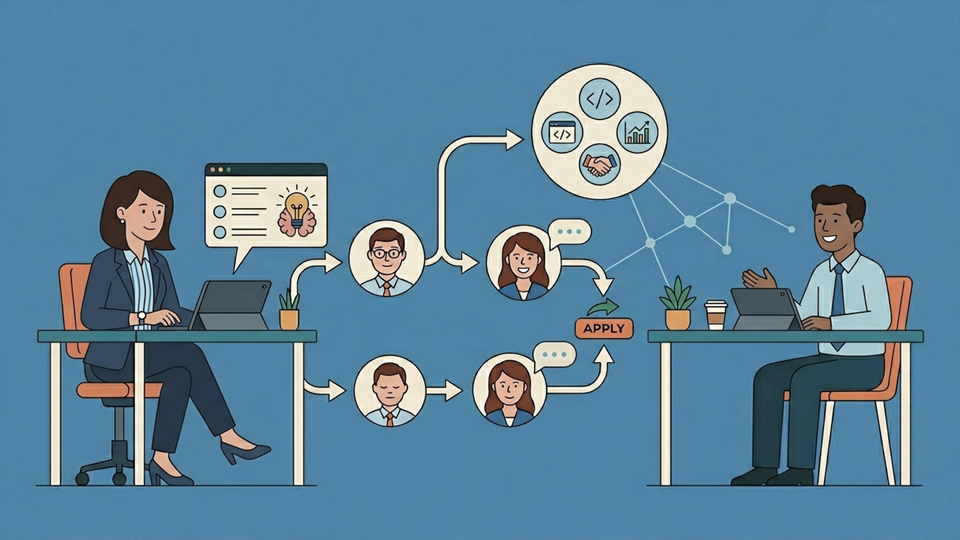
Top recruiters know that the success of an interview often hinges on understanding the candidate's mindset. They recognize that candidates may feel nervous, overconfident, or uncertain, and tailor their approach accordingly. A calm, structured environment encourages openness, allowing recruiters to assess skills and cultural fit more accurately.
Psychological safety plays a key role. Candidates who feel judged or rushed tend to provide rehearsed answers, limiting the depth of insights. Recruiters who use active listening and empathetic responses often uncover more authentic behaviors and motivations.
For example, asking candidates to describe past challenges and how they approached them gives a glimpse into problem-solving skills and adaptability, rather than focusing solely on technical competencies.
High-performing recruiters design interviews with intentional structure. They balance behavioral, situational, and technical questions to extract relevant information while keeping the conversation engaging.
Behavioral questions help reveal patterns in past behavior, which is a strong predictor of future performance. Asking "Tell me about a time you led a team through a challenging project" allows recruiters to assess leadership, communication, and resilience.
Situational questions explore how candidates might handle hypothetical scenarios. These are particularly useful for roles requiring decision-making under uncertainty. For instance, "How would you manage a sudden drop in client satisfaction metrics?" reveals analytical thinking and prioritization skills.
Technical assessments are often integrated seamlessly, not as a standalone test, but embedded in discussion. This approach reduces candidate stress and provides context for evaluating problem-solving abilities.
Top recruiters often apply subtle psychological techniques to uncover deeper insights. One common approach is the use of open-ended questions that encourage storytelling. This technique leverages the narrative bias, where candidates naturally reveal their values, motivations, and cognitive styles.
Another technique involves mirroring body language and tone to establish rapport. Studies show that candidates tend to communicate more freely when they feel understood and aligned with the interviewer.
Recruiters also use probing questions to test consistency. If a candidate describes a leadership example, following up with questions like "What obstacles did you face?" or "Who else was involved and how did you coordinate?" can highlight depth of experience and critical thinking.
Additionally, framing questions in a positive context reduces defensiveness. Instead of asking "What did you fail at?", asking "What was a challenging situation you learned from?" encourages reflection without triggering anxiety.
After interviews, top recruiters rely on structured evaluation to mitigate bias and improve decision-making. This includes rating candidates against predefined criteria, using scorecards, and comparing responses across multiple dimensions.
Behavioral anchors provide consistency. For example, a score of 5 might indicate "demonstrates leadership with clear examples and impact", while a 3 could indicate "limited examples with moderate results". This reduces subjective interpretation and allows for fairer comparisons.
Debrief sessions with multiple interviewers also enhance accuracy. Sharing observations from different perspectives ensures that a single biased viewpoint does not dominate the decision-making process.
Technology can support this process. Applicant tracking systems like Zamdit allow recruiters to store detailed notes, track scoring patterns, and maintain a talent database for future opportunities.
High-performing recruiters focus not only on assessment but also on candidate experience. Engaged candidates are more likely to accept offers and become advocates for the company. Clear communication about next steps, timely feedback, and transparency in decision-making foster trust. Candidates who feel respected and informed are more motivated to invest themselves during the process.
Recruiters also personalize interactions. Remembering previous conversations, referencing candidate interests, and acknowledging achievements contribute to a positive impression. Even small touches, such as sharing relevant company insights or inviting candidates to team webinars, enhance engagement and showcase organizational culture.
By combining psychological insights, structured evaluation, and consistent engagement, top recruiters create interviews that are both effective and memorable, leading to better hiring outcomes and long-term talent relationships.
Learn the most common interview mistakes and how to avoid them. Improve your hiring process with structured questions, objective evaluation, and attention to both skills and cultural fit.
Read More
Structured interviews are one of the most effective ways to reduce bias in hiring. Learn how to design consistent questions, scoring rubrics, and processes that improve fairness and decision-making.
Read More
Learn how to use behavioral interview questions to assess soft skills effectively. Discover methods, examples, and best practices to evaluate communication, teamwork, and problem-solving abilities.
Read MoreZamdit brings together every tool you need to find, assess, and hire top talent faster, smarter, and with complete clarity.
No credit card required